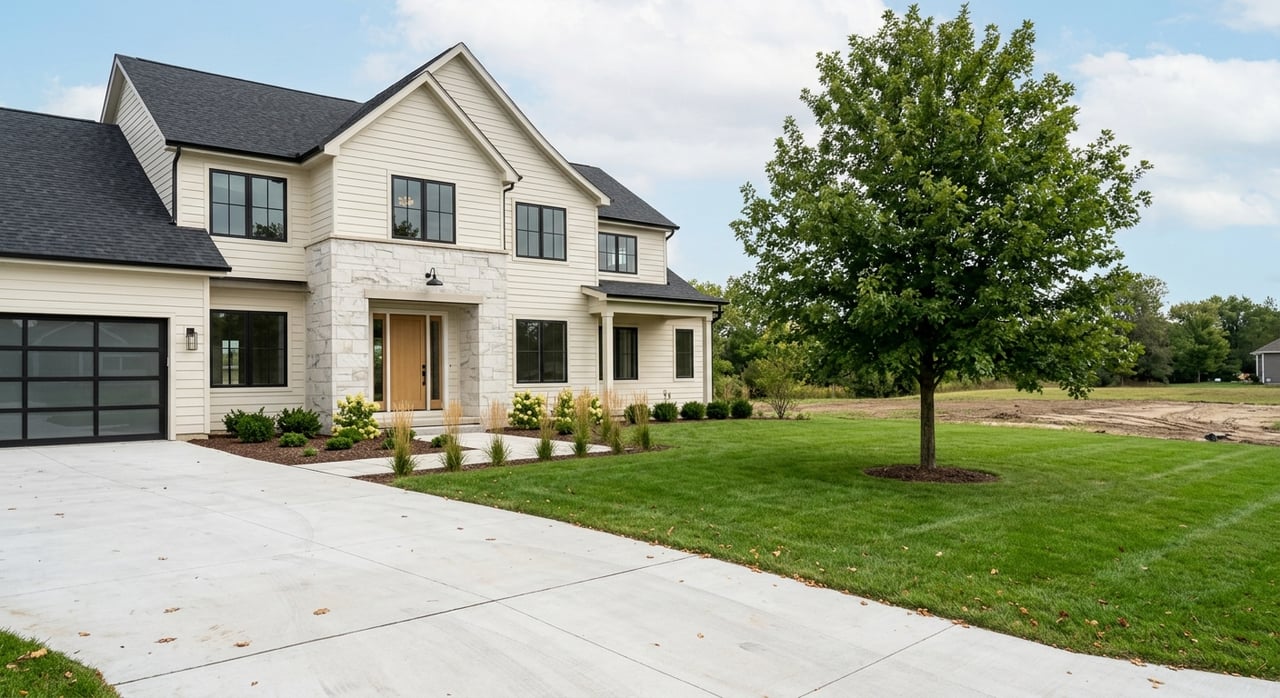
If you are looking for the next place to invest in Kane County, Hampshire deserves a closer look. It is not simply a cheaper alternative to larger nearby markets. Hampshire stands out because it still has room to grow, public development activity you can track, and access that keeps it connected to the broader region. For small investors, builders, and land buyers, that creates a very different kind of opportunity. Let’s dive in.
Why Hampshire Stands Out
Hampshire looks more like an edge-growth market than a mature, fully built-out suburb. According to the U.S. Census QuickFacts for Hampshire, the village’s 2024 population estimate reached 8,864, which is up 15.7% from 2020. That is a notable pace of growth compared with nearby Elgin and Kane County overall.
That growth matters because it often brings new housing demand, more development interest, and greater attention to land position. Hampshire also has a larger household size than Elgin or Kane County, which points to demand that is more owner-oriented than highly transient. For investors, that usually shifts the conversation away from quick rental turnover and toward long-term housing demand.
Access Supports Demand
Location is a big part of the Hampshire story. The village notes on its transportation page that the I-90 and US Route 20 interchange gives residents and commuters direct regional access. The same page notes that O’Hare is about 40 miles east via I-90 and Rockford is about 35 miles west.
Hampshire also has weekday Metra access through Big Timber in Elgin and weekend access through downtown Elgin. That does not make Hampshire an urban-style transit market, but it does support the idea that the village is connected rather than isolated. If you are investing with future buyers in mind, commuter convenience is part of the value equation.
Land Is Still Part of the Opportunity
One of the clearest reasons investors watch Hampshire is simple: there is still development runway. The village’s available properties page states that Hampshire has more than 1,000 acres of vacant land available for development, along with more than 85 acres of commercial property and more than 198 acres of industrial property.
That is not typical of a tightly built suburban market where most opportunities come from resale only. It means Hampshire still offers room for lot plays, future residential development, and builder-focused strategies. The same village page also notes that home builders are active in two subdivisions, which signals ongoing construction activity rather than purely theoretical land supply.
Watch the Development Pipeline
In Hampshire, opportunity often shows up in public view before it reaches the broader market. The village’s major developments page lists projects including Light Property, Prairie Ridge North Resubdivision, and Oakstead Resubdivision.
Prairie Ridge North had revised preliminary plans and an annexation amendment approved in March 2023. Oakstead had an amended agreement and new preliminary subdivision plan approved in March 2021. Light Property has annexation and zoning approval, though future Board approvals are still needed for subdivision and end-user site plans.
For you as an investor, these details matter. They help you understand whether an opportunity is raw land, early-stage entitled property, or something closer to active development. Timing can shape both pricing and risk.
Public Process Can Reveal Early Openings
Hampshire’s Planning and Zoning Commission reviews variances, special uses, rezoning, planned developments, and subdivisions. Petitions generally must be filed 21 days before a meeting. That makes local agendas and meeting materials useful for investors who want to spot activity before it becomes widely marketed.
This is especially important in a market where inventory is not deep and the best opportunities may never look like a standard online home search. If you are targeting lots, builder inventory, land, or smaller portfolio additions, the public process can offer useful clues about what may be coming next.
Hampshire Is Not a Deep Rental Arbitrage Market
If your strategy is based on buying from a large pool of discounted rentals, Hampshire may not fit as well as other places. The ACS profile for Hampshire shows an 83.3% owner-occupied housing rate, median household income of $94,773, and 95.9% of residents living in the same house one year earlier. Those figures point to a stable, owner-driven market.
The same profile reports a median gross rent of $2,589, though smaller markets can show more volatility in rent estimates. By comparison, Kane County QuickFacts show a median gross rent of $1,453, and Elgin’s reported rent is lower as well. That suggests Hampshire has a smaller and relatively costly rental stock rather than a broad, fluid rental inventory.
Current Listings Show a Tighter Market
Current market snapshots support that same theme. As of January 2026, Realtor.com’s Hampshire overview showed about 125 homes for sale and 11 rentals, with a median home price of $399,875 and median rent of $2,100. Elgin, by comparison, showed 274 homes for sale and 84 rentals, with a median home price of $329,750 and median rent of $1,874.
For small investors, that means Hampshire looks smaller, tighter, and less driven by high-volume rental inventory. You may find opportunity here, but it is more likely to come from property type, timing, and location within the village than from mass-market bargain hunting.
Where Investors May See the Best Fit
Based on Hampshire’s growth pattern, land availability, and owner-heavy profile, some strategies appear more aligned than others. This does not guarantee performance, but it does help frame where many investors focus their attention.
Land and lot acquisitions
With more than 1,000 acres of vacant land identified by the village, Hampshire remains relevant for buyers who want to think beyond existing-home resale. Land and lot opportunities may appeal to investors who can wait for development timing, annexation progress, or future user demand.
Build-to-sell projects
A growing population, active subdivisions, and commuter access can support demand for new housing. In a market like Hampshire, build-to-sell strategies may be more attractive than chasing limited resale inventory, especially when lot position and subdivision timing are favorable.
Build-to-rent opportunities
Hampshire is not a large rental market, but the available rental stock appears relatively thin. That can make build-to-rent worth evaluating for investors who understand local demand and want to create product where supply is limited.
House-hack or small-scale ownership plays
For some buyers, Hampshire may work better as a live-in investment strategy rather than a pure cash-flow play. A smaller market with stable owner occupancy can attract buyers who want to offset housing costs while holding property in a growth-oriented area.
Hampshire Versus Elgin and Kane County
Hampshire is not necessarily the obvious low-cost play. Its owner-occupied housing value of $329,800 is close to Kane County’s $327,000 and above Elgin’s $273,000, according to Census QuickFacts. So the story here is not that Hampshire is dramatically cheaper.
Instead, Hampshire offers a different mix. It has fewer listings, higher owner occupancy, visible land-development potential, and a market structure where public approvals and subdivision activity can matter as much as resale comps. That makes it attractive for investors who want to be early, informed, and selective.
Why Local Guidance Matters
In a market like Hampshire, knowing the inventory is only part of the job. You also need to understand what is in the pipeline, what stage a project is in, and how public approvals may affect timing and value. That is where hyper-local guidance becomes especially useful.
Collingbourne Group works with buyers, sellers, investors, rental clients, and land buyers across the Fox Valley. If you are exploring Hampshire for a lot purchase, small investment property, builder opportunity, or off-market lead, working with a local team can help you focus on opportunities that fit your goals. If you want a practical conversation about where opportunity may be emerging in Hampshire, connect with Michelle Collingbourne.
FAQs
What makes Hampshire, Illinois attractive to real estate investors?
- Hampshire stands out for its recent population growth, access to I-90 and Route 20, lower-density development pattern, and more than 1,000 acres of vacant land identified by the village for development.
Is Hampshire, Illinois better for rentals or land investment?
- Based on the available data, Hampshire appears more aligned with land, lot, build-to-sell, build-to-rent, and other timing-based strategies than with large-scale discounted rental acquisition.
How can you track new development activity in Hampshire, Illinois?
- You can monitor the village’s major development updates and Planning and Zoning Commission process, where annexation, rezoning, subdivision, and planned development activity may appear before it reaches wider market channels.
How does Hampshire compare with Elgin for investors?
- Hampshire is smaller, more owner-occupied, and has fewer listings and rentals than Elgin, while also showing more visible land-development potential and a higher median home price in current listing snapshots.
Why work with a local real estate team for Hampshire investment property?
- A local team can help you evaluate not just listed properties, but also subdivision timing, land position, off-market possibilities, and public development signals that may affect your investment decisions.